How Venture Funds Can Use AI for Deal Flow Intelligence Without Adding More Tools
Learn how venture capital funds can leverage AI-powered deal flow intelligence to unify fragmented data without adding new tools. Modernize your GP-LP relationship lifecycle and eliminate tool sprawl with native AI integration.
Published by

Vessel
Target audience
General Partners (GPs), Venture Capitalists, Fund Operations, Investor Relations Professionals
SHARE THIS
The 2026 VC Landscape: From Tools to Architecture
In 2026, the competitive advantage in venture capital has shifted from having artificial intelligence tools to how those tools are architected into a fund's core operations. While the venture capital industry has moved past the initial AI experimentation phase, fund managers are now colliding with a new operational bottleneck: tool sprawl.
According to a 2026 report by Blott, 85% of VC dealmakers now use AI for daily task automation, and 82% use it for deal sourcing research. However, bolting standalone AI applications onto legacy workflows has created fragmented data silos. The solution for modern general partners (GPs) is not to purchase another point solution, but to leverage native AI to unify existing pipeline, relationship, and engagement data into actionable deal flow intelligence.
What is AI-Powered Deal Flow Intelligence?
AI-powered deal flow intelligence is the process of using artificial intelligence to aggregate, analyze, and extract actionable investment signals from existing, fragmented venture capital data sources without requiring manual data entry.
Instead of relying on analysts to manually update spreadsheets or transfer data between disparate software applications, AI deal flow intelligence acts as a connective layer. It passively reads emails, calendar invites, pitch decks, and financial statements to automatically map relationship networks, prioritize investment opportunities, and surface early market signals.
The Challenge: Tool Sprawl and the "Integration Tax"
Venture funds are currently facing a "SaaS Apocalypse," where the proliferation of point solutions has created more administrative work rather than less. Large organizations now use an average of over 275 SaaS applications, leading to point-to-point sprawl and brittle integration scripts (FYI, 2026).
Critical deal data is often trapped in these silos—marketing data in one CRM, financial models in an ERP, and vital institutional knowledge buried in email threads. As noted by Unframe AI, "We've convinced ourselves that enterprise data integration must be complete before AI can begin. That assumption is killing more AI initiatives than any technical limitation ever could."
Because legacy platforms fail to ingest and synthesize unstructured data effectively, Excel remains the "unofficial operating system" for most firms (LinkedIn/JVP, 2026). To break this cycle, funds must adopt a new approach to their tech stack.
Step-by-Step Guide: Implementing AI Deal Flow Intelligence Without New Tools
To avoid tool sprawl, forward-thinking funds are adopting strategies that layer AI over existing data streams. Here is how fund managers can turn fragmented data into unified intelligence.
Step 1: Shift from a "Collection" to a "Connection" Mindset
Instead of undertaking massive data migration projects to build centralized data warehouses (a "collection" mindset), firms should use AI for contextualization (a "connection" mindset).
New architectural patterns allow Large Language Models (LLMs) to act as "compilers" that generate execution plans to query existing databases without moving the underlying data (Data Mastery, 2026). This zero-ETL (Extract, Transform, Load) integration means AI-native platforms can interpret documents and match transactions across heterogeneous sources—like MySQL, PostgreSQL, and spreadsheets—with zero risk and without rewriting a single line of code (Medium/Favaron, 2026).
Step 2: Automate Ingestion to End the Spreadsheet Cycle
AI finally addresses the part of the investment workflow that has stubbornly refused to scale: ingestion, synthesis, and operational follow-through.
Firms must move beyond basic Optical Character Recognition (OCR) and implement Intelligent Document Processing (IDP). IDP understands the actual meaning of pitch decks and financial statements, extracting key data points and creating structured records automatically (GetCaruso, 2026). By automating ingestion, AI "associates" can screen thousands of inbound decks to identify the top tier of deals worth a partner's time, effectively solving the triage throughput problem (Medium/Pocius, 2026).
Step 3: Activate Passive Relationship Intelligence
Deal flow intelligence requires turning passive engagement data—such as emails, calendar meetings, and LinkedIn connections—into active deal signals.
Relationship intelligence capabilities analyze communication history to surface the strongest warm path to a founder before a cold reach-out is ever made (Clarify, 2026). Furthermore, this passive monitoring extends post-investment; AI-powered monitoring can detect financial stress in portfolio companies an average of 2.3 months earlier than traditional board reporting cycles (Blott, 2026).
Step 4: Redesign Workflow Architecture Around Native AI
As noted by GoingVC (2026), "The advantage no longer comes from access to AI tools. Those are widely available. The advantage comes from workflow architecture. AI-first firms redesign how information moves."
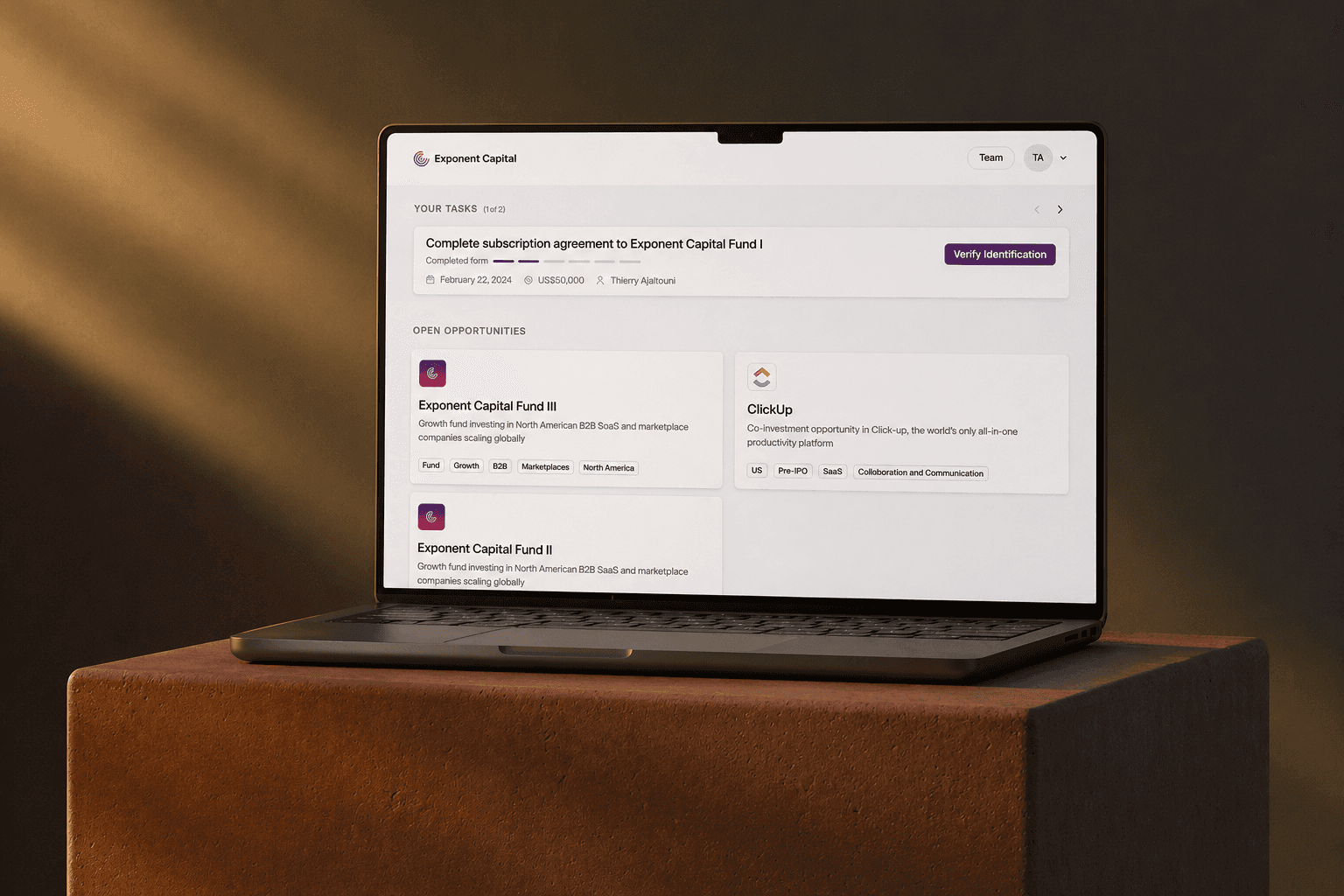
Rather than bolting standalone sourcing tools onto legacy CRMs, firms should utilize unified platforms that have AI built into their foundation. For example, Vessel provides an AI-powered investor relations and fund management platform that modernizes the entire GP-LP relationship lifecycle. Because Vessel features an automation-first design and native AI integration, it acts as the AI architect for the fund—unifying pipeline building, fundraising, and reporting into a single source of truth without requiring firms to adopt half a dozen separate point solutions.
Measuring the Impact of Unified AI in Venture Capital
Firms that successfully transition from fragmented tools to unified AI architectures are seeing measurable, compounding advantages in 2026. The data clearly illustrates the divide between AI-native funds and traditional operators:
Faster Screening: AI-driven sourcing cuts initial screening time from 45 minutes to just 8 minutes per company (Blott, 2026).
Higher Quality Deal Flow: Firms using AI-driven sourcing review 3x to 5x more qualified opportunities than those relying strictly on traditional networks.
Reduced Bias: Algorithmic screening reduces bias in initial founder evaluations by 30% (WifiTalents, 2026).
Predictive Accuracy: Machine learning models can now predict startup failure with 80% accuracy based on early-stage data.
Conclusion
The era of evaluating venture capital software based on how many new features it adds to your dashboard is over. In 2026, the most effective deal flow intelligence strategies focus on reducing friction, eliminating manual data entry, and surfacing insights from the data your firm already owns.
By shifting to a workflow architecture powered by unified platforms like Vessel, fund managers can transform their fragmented silos into a cohesive intelligence engine. The result is a leaner, faster firm capable of spotting signals earlier, prioritizing the right opportunities, and delivering the dynamic, inspectable reporting that today's limited partners demand.
Product updates
Be the first to hear about every new feature, improvement, and release from Vessel.