Why Most VC Fundraising Software Fails After the First LP Meeting
Most VC fundraising software fails by focusing only on outreach. Learn why purpose built, end to end infrastructure is essential for trust building and eliminating manual work during the long LP diligence and onboarding process.
Published by

Vessel
Target audience
General Partners (GPs), Investor Relations Professionals, Venture Capitalists, Limited Partners (LPs)
SHARE THIS
Why Most VC Fundraising Software Fails After the First LP Meeting
In the 2026 venture capital environment, securing a first meeting with a Limited Partner (LP) is only a fraction of the battle. With fundraising cycles now stretching to an average of 20 months, General Partners (GPs) are discovering a critical flaw in their tech stacks: most VC fundraising software is designed solely for top-of-funnel outreach. To survive the grueling diligence and onboarding phases, firms must transition from fragmented tools to purpose built, end to end infrastructure that eliminates manual work and focuses on long-term trust building.
What is the "Outreach Trap" in VC Fundraising?
The "outreach trap" occurs when VC firms rely on generic Customer Relationship Management (CRM) tools that excel at tracking initial emails but fail to support complex, multi-year LP diligence processes. These front-end tools create a false sense of momentum that quickly dissipates once LPs request deeper operational data.
According to Clarify's 2026 analysis of VC CRMs, legacy tools suffer from "data latency," requiring constant manual upkeep because they assume a linear sales process rather than a cyclical relationship model. Consequently, Investor Relations (IR) teams at mid-market funds spend roughly 30% of their time on manual logging and reconciling communication history. This administrative burden leads to a median response time of 48 hours for LP inquiries—a delay that can kill momentum in today's highly competitive market.
Legacy Outreach Tools vs. Purpose-Built Infrastructure
To understand why software fails post-meeting, it is helpful to compare the capabilities of standard outreach CRMs against modern, unified platforms.
Fundraising Phase | Legacy Outreach Software | Purpose-Built Infrastructure |
|---|---|---|
Pipeline Building | Basic email tracking and manual data entry. | Automated relationship mapping and structured touchpoints. |
Due Diligence | Static Virtual Data Rooms (VDRs) with "engagement blindness." | Dynamic data rooms with real-time LP engagement analytics. |
LP Onboarding | Messy back-and-forth of PDFs and spreadsheets. | Automated KYC/AML and digital subscription management. |
Ongoing Reporting | Manual Excel updates and static PDF distribution. | Real-time LP dashboards and automated capital calls. |
The Diligence "Death Valley": Where Generic Software Breaks Down
The period between the first LP meeting and the first close is where most fundraising efforts stall. In 2026, operational maturity has replaced simple fund performance as the primary filter for institutional investors.
According to ILPA Due Diligence Best Practices, 73% of institutional LPs now review a fund's data room before taking a first meeting. A standard institutional-grade data room requires 60 to 90 documents organized across 12 to 14 ILPA-aligned folders. Legacy software fails here by providing static file repositories that lack a "reasoning layer" to interpret capital flows or side letters.
Furthermore, outreach tools rarely provide insight into what happens after a pitch deck is sent, leaving GPs guessing which LPs are actually leaning in. As noted by Altvia, "Performance is necessary, but it's no longer sufficient." LPs are selecting managers based on how the firm operates—its speed, clarity, and consistency.
Onboarding Friction and the Erosion of Trust
Even after securing a soft commitment, GPs frequently lose momentum during the closing phase due to fragmented workflows. Manual handling of Know Your Customer (KYC) and Anti-Money Laundering (AML) documents creates severe bottlenecks.
Moving from a verbal commitment to a signed subscription agreement often devolves into a chaotic exchange of emails. This lack of automation not only delays the close but actively damages the trust building established during earlier phases. LPs expect a seamless, institutional-grade experience. In one documented instance, an LP reduced their commitment size simply because poor internal systems required them to submit the same KYC information three times in six months.
Bridging the Gap with End-to-End Solutions
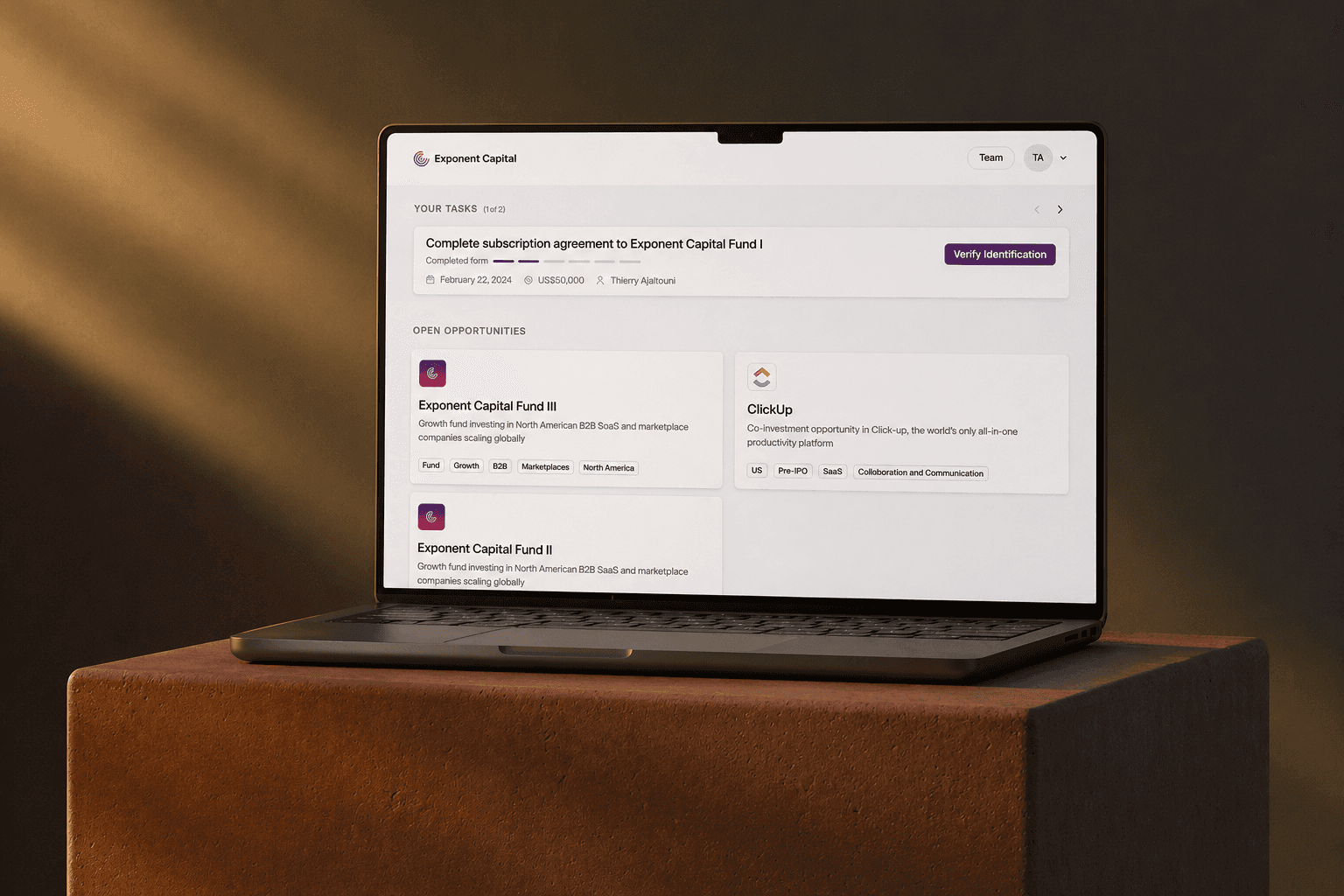
To navigate the complexities of modern fundraising, GPs require a unified platform that modernizes the entire GP-LP relationship lifecycle. This is where Vessel, an AI-powered investor relations platform, differentiates itself from legacy CRMs.
Vessel is purpose built for venture capital, integrating pipeline building, dynamic data rooms, and automated KYC/subscription management into a single workflow. By replacing disconnected tools, Vessel eliminates the manual work that plagues IR teams and transforms fundraising from a hustle into a scalable system.
The operational outcomes of adopting a unified system are highly measurable. For example, see how Inovia Capital scaled co-investments and automated reporting using Vessel. By replacing manual Excel-based workflows, the $2.5B AUM firm successfully brought in new High-Net-Worth (HNW) LPs who cited the streamlined "Vessel experience" as a key differentiator.
Similarly, growth-stage firm Intrepid utilized Vessel to catalyze their first close by automating NDAs and data sharing, proving that operational efficiency directly impacts the LP experience. As Gaurav Jain of Afore Capital notes, fundraising is now a system, requiring infrastructure that personalizes the LP journey at scale.
Conclusion: Moving from Outreach to Infrastructure
In 2026, the ability to secure a first meeting must be backed by the operational rigor to close the fund. Relying on front-end outreach tools leaves GPs vulnerable during the critical diligence and onboarding phases. By adopting end to end, purpose built infrastructure, venture capital firms can eliminate manual work, accelerate their path to the first close, and focus on what truly matters: long-term trust building with their LPs.
Product updates
Be the first to hear about every new feature, improvement, and release from Vessel.